Wild Roses Perfume
Wild Roses Perfume
27/72: May 10 to 14
Wild roses perfume the forest edge. Nootka rose opens fragrant and deep pink.

風物詩 · Fūbutsushi
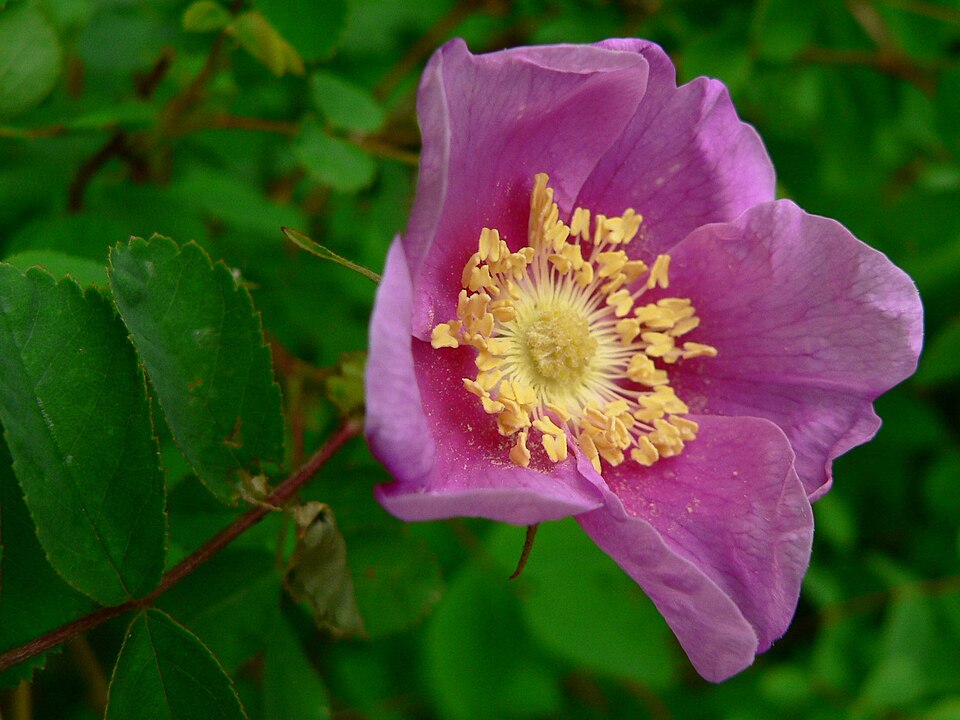
Nootka rose blooming along a forest edge in mid-May — deep pink single flowers and the perfume that fills the whole trail, strongest in the morning calm.
物の哀れ · Mono no Aware
The fragrance is strongest on still mornings and fades entirely in the afternoon. Each flower lasts only three days. You have to catch it right.
What the season brings?
Mid-May brings the flowering of Nootka rose (Rosa nutkana) and other native wild roses across the Pacific Northwest, filling forest edges, streambanks, and meadows with fragrant deep pink flowers. Nootka rose produces large single flowers (2-3 inches across) with five pink petals and prominent yellow stamens, creating one of spring's most aromatic displays. These deciduous shrubs grow 3-9 feet tall with characteristic thorny stems and compound leaves, thriving in moist to moderately dry sites from Alaska to northern California. The flowers attract numerous native bees and other pollinators, while the bright red rose hips that develop by fall provide crucial food for birds and wildlife through winter. Indigenous peoples ate the hips fresh or dried, and the plants remain culturally important for food, medicine, and materials throughout the region.
Convergence chain
Triggered by
Nootka rose (Rosa nutkana) blooms when temperatures are consistently above 15°C; its flat, open, five-petaled flower requires no specialist — accessible to virtually every pollinator from tiny sweat bees to large bumblebees, making it the most democratically visited flower of spring
Enables
Wild rose flowers support the broadest pollinator diversity of any single PNW shrub — over 50 bee species documented visiting; rose hips persist through winter, sustaining cedar waxwings, American robins, and Bohemian waxwings through December and January; rose thickets provide nesting cover for yellow warblers, common yellowthroats, and song sparrows
The cascade
Wild rose blooms across wetland edges and forest margins → syrphid flies, native bees, and bumblebees concentrate → broad pollination produces heavy hip set → rose hips persist through fall and winter → cedar waxwings arrive in November and strip hips when other food is scarce → waxwing flocks move across the landscape tracking hip abundance → the hips that persist to February sustain waxwings through the hardest winter weeks before early blossom returns
Foods to Mark the Season
Hood Canal spot shrimp season opens in mid-May (Marine Area 12, with a narrow daily window on specific dates only)—one of the most anticipated single-day fisheries in Washington, with boats queuing before dawn for the brief opening. BC live spot prawns are available fresh from fishing boats at dockside markets. First local strawberries may appear at the warmest Willamette Valley farm stands.
Events This Season
Port Townsend, WA, third week of May. Washington's longest-running spring festival (since 1935) celebrates peak bloom of the Pacific rhododendron across the Olympic Peninsula — wild roses in the hedgerows and rhododendrons on the hillsides above Victorian Port Townsend open in the same window. Grand parade, art shows, trike races, and live music.
events / washington / port-townsend-rhododendron-festival →Invermere, BC. The festival's final days — the Gala Celebration, keynote, and closing field excursions — fall in this window. The Columbia Wetlands are at peak spring activity: ospreys incubating on their platforms, sandhill cranes still moving through, and the heronries in full breeding activity.
festivals / british-columbia / wings-over-the-rockies →Creston, BC. The festival opens on May 8 with the evening banquet and runs through May 11 — this window covers the heart of programming, including morning duck lake tours, kayak excursions through the heron rookery, and the Drop-in Discovery Centre. The Kootenay River floodplain is alive with yellow-headed blackbirds and arriving white pelicans.
festivals / british-columbia / creston-valley-bird-festival →Frequently Asked Questions
Visions of the Season
Read more
Each microseason is approximately 5 days, marking the subtle changes in nature throughout the year.