Thimbleberries Ripen
Thimbleberries Ripen
39/72: Jul 12 to 16
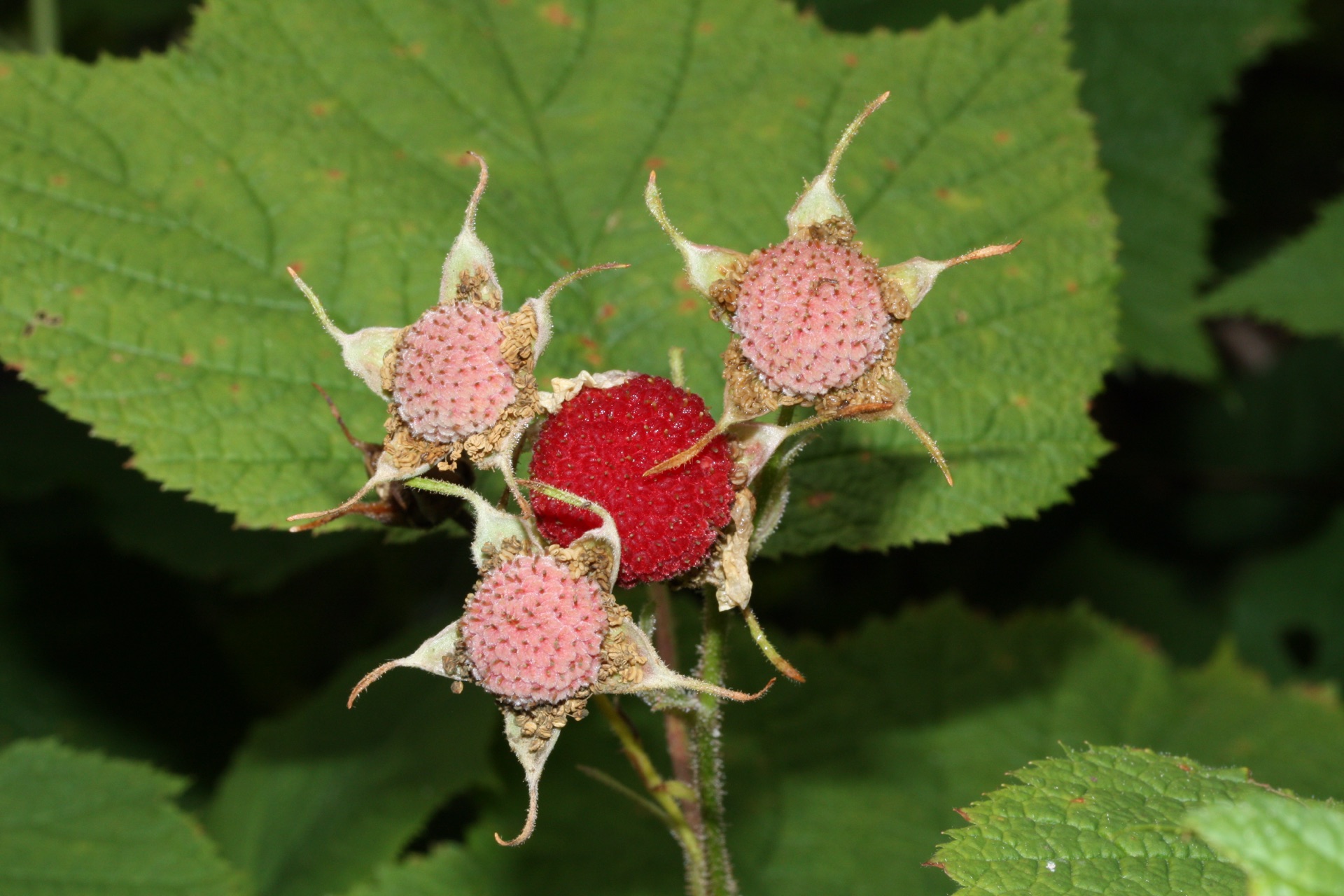
Thimbleberries ripen soft and sweet. Gentle red jewels in the summer shade.

風物詩 · Fūbutsushi
A ripe thimbleberry cupped in the palm in mid-July — soft red, pulling free from its receptacle like a tiny hollow drum, eaten immediately in the forest shade.
物の哀れ · Mono no Aware
They will not keep past picking. By the time you reach the trailhead they have already begun to fall apart. Thimbleberries exist only in the moment of eating.
What the season brings?
Mid-July brings the ripening of thimbleberries (Rubus parviflorus), with soft, bright red berries appearing on thornless shrubs throughout Pacific Northwest forests. These unique berries are shaped like thimbles or raspberries but are much softer and more delicate, often crushing at the slightest pressure. The berries have a mild, slightly tart flavor and are beloved by foragers despite being somewhat seedy. Thimbleberries grow prolifically in moist forests, along streams, and in disturbed areas, often forming dense stands in partial shade. The large maple-like leaves make the plants easy to identify even before berries appear. Indigenous peoples throughout the region ate thimbleberries fresh and sometimes dried them, though their soft texture makes preservation challenging. Today, thimbleberries are enjoyed fresh by hikers and wildlife alike, providing important food for birds, bears, and small mammals throughout the summer.
Convergence chain
Triggered by
Thimbleberry fruit completes development 6-7 weeks after the May bloom; the ripening arrives in July heat when animal energy demands are highest and the bears that depend on fruit are transitioning from lean late-spring diet to the hyperphagia phase
Enables
Thimbleberry is among the most calorie-dense soft fruits available in mid-July; critical for black bears beginning their first intensive hyperphagia push; grouse chicks at peak growth rate consume large quantities; band-tailed pigeons flock to forest-edge patches for days at a time
The cascade
Thimbleberry fruit ripens in July heat → black bears shift from the omnivorous spring diet to intensive fruit consumption → bears begin the first hyperphagia phase → fat accumulation starting in July improves female body condition going into fall → better body condition increases twin-birth probability → band-tailed pigeons flock to thimbleberry patches → pigeon flocks strip patches within days and move to the next ripening location → seeds deposited in new forest gaps from recent windthrow
Foods to Mark the Season
Cascade huckleberries (*Vaccinium membranaceum*) begin ripening at 2,000–3,500 ft elevations—seek them in the Mt. Hood, Mt. Adams, and Mt. Rainier drainages. Sockeye salmon are running in the Columbia, prized for their deep-red flesh and rich fat content—one of the best eating salmon in the Pacific. Peaches begin ripening in the Yakima Valley and Rogue Valley, the first stone fruit peak of PNW summer.
Frequently Asked Questions
Visions of the Season
Read more
Each microseason is approximately 5 days, marking the subtle changes in nature throughout the year.