Chinook Fight Upstream
Chinook Fight Upstream
28/72: May 15 to 19
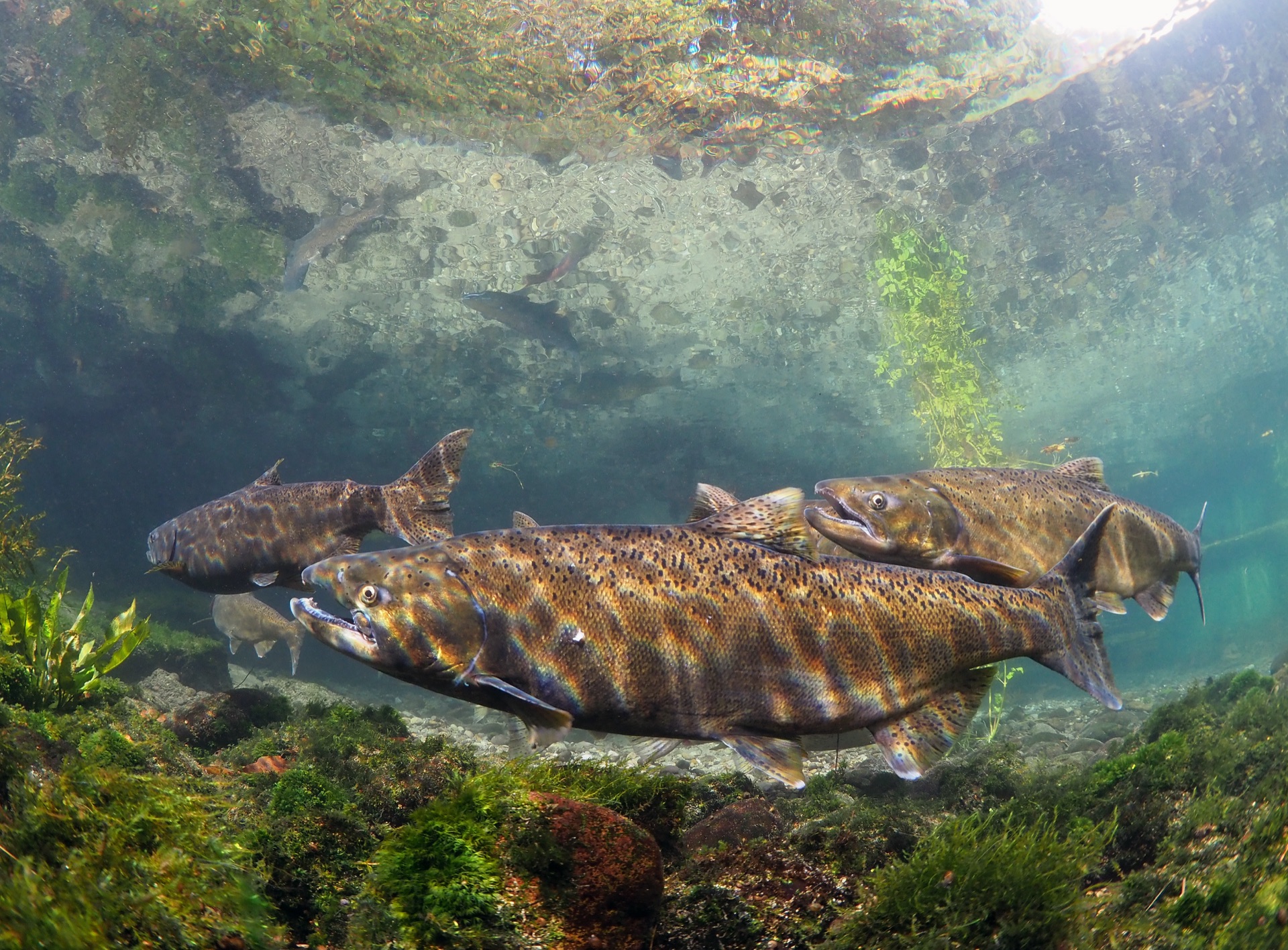
Spring chinook fight upstream. Silver bodies leaping toward ancient spawning grounds.

風物詩 · Fūbutsushi
A spring chinook clearing a falls on the Willamette in a single arc — the season's largest fish making its final run, silver going copper in the current.
物の哀れ · Mono no Aware
They will not return. Each fish that clears the falls is making its last journey, its body already converting to the gravel bed it will become.
What the season brings?
Mid-May marks the peak of spring chinook salmon (Oncorhynchus tshawytscha) runs in Pacific Northwest rivers, with these massive fish fighting upstream toward their natal spawning grounds. Spring chinook, also called "springers," are among the largest and most prized salmon, with some individuals exceeding 40-50 pounds. These fish spend 3-5 years in the ocean before returning to spawn, and their May timing makes them distinct from fall-run chinook. Watch for dramatic leaping displays at waterfalls and rapids as fish navigate obstacles on rivers like the Columbia, Willamette, and Fraser. Spring chinook runs have declined dramatically from historical levels due to habitat loss, dams, and overfishing, making conservation efforts critical. These iconic fish remain culturally and economically vital to indigenous communities and the broader Pacific Northwest, representing the enduring connection between ocean and mountain ecosystems.
Convergence chain
Triggered by
Season 20: Snowpack Peaks — cold snowmelt maintaining river temperatures below 18°C (the Chinook survival threshold); spring Chinook spent the winter in the ocean and enter rivers when flow and temperature are in range, beginning a journey of 4-6 months to their spawning grounds
Enables
Spring Chinook are the fattest and largest salmon, carrying the most marine-derived nutrients per fish; their May presence triggers the first eagle and osprey fishing activity of the season; black bears emerging from winter dens and facing their leanest period benefit from spring Chinook as their first reliable protein; post-spawn carcasses months later will deliver marine nutrients to riparian soil
The cascade
Snowmelt holds river below 18°C → spring Chinook enter river mouths → ospreys arrive at river fishing sites, the first fish-focused raptors of spring → black bears emerge from dens and congregate where fish are visible → the largest Chinook taken by bears; smaller fish pass upstream → dying post-spawn adults in October return marine nutrients to the riparian zone → nitrogen pulse feeds riparian alder and cottonwood heading into winter
Foods to Mark the Season
Oregon Hood strawberries—the legendary fragile, intensely sweet early variety developed in the Willamette Valley—begin their brief season in mid-to-late May. These delicate berries don't ship well and are sold only locally at farms and farmers markets, making them a true seasonal treasure. Thimbleberries (*Rubus parviflorus*) begin ripening at the earliest coastal and lowland sites.
Events This Season
Leavenworth, WA. The festival runs May 14-17, falling across this microseason's opening days — field trips into ponderosa pine canyon habitat and the Wenatchee River corridor are underway, along with the keynote presentation and Birders' BBQ on the final Saturday. Canyon wrens, Lewis's woodpeckers, and yellow-breasted chats are the sought-after species this week.
festivals / washington / leavenworth-spring-bird-fest →Eugene, OR. The 47th annual festival takes place on May 17 — the Sunday after Mother's Day — with over 250 native wildflower species on display, guided nature walks, and live music along the Coast Fork Willamette River.
festivals / oregon / mount-pisgah-wildflower-festival →La Grande, OR, May 15–17. A free, uncrowded annual festival at one of eastern Oregon's most bird-rich wetlands — staffed birding stations, expert-led field trips departing before dawn, and an evening keynote on short-eared owls surround spring chinook migration week with intensive birding in the Blue Mountains.
festivals / oregon / ladd-marsh-bird-festival →Frequently Asked Questions
Visions of the Season
Read more
Each microseason is approximately 5 days, marking the subtle changes in nature throughout the year.