Sockeye Enter Rivers
Sockeye Enter Rivers
32/72: Jun 5 to 9
Sockeye enter the river mouths. Crimson tide ascending toward glacial lakes.

風物詩 · Fūbutsushi
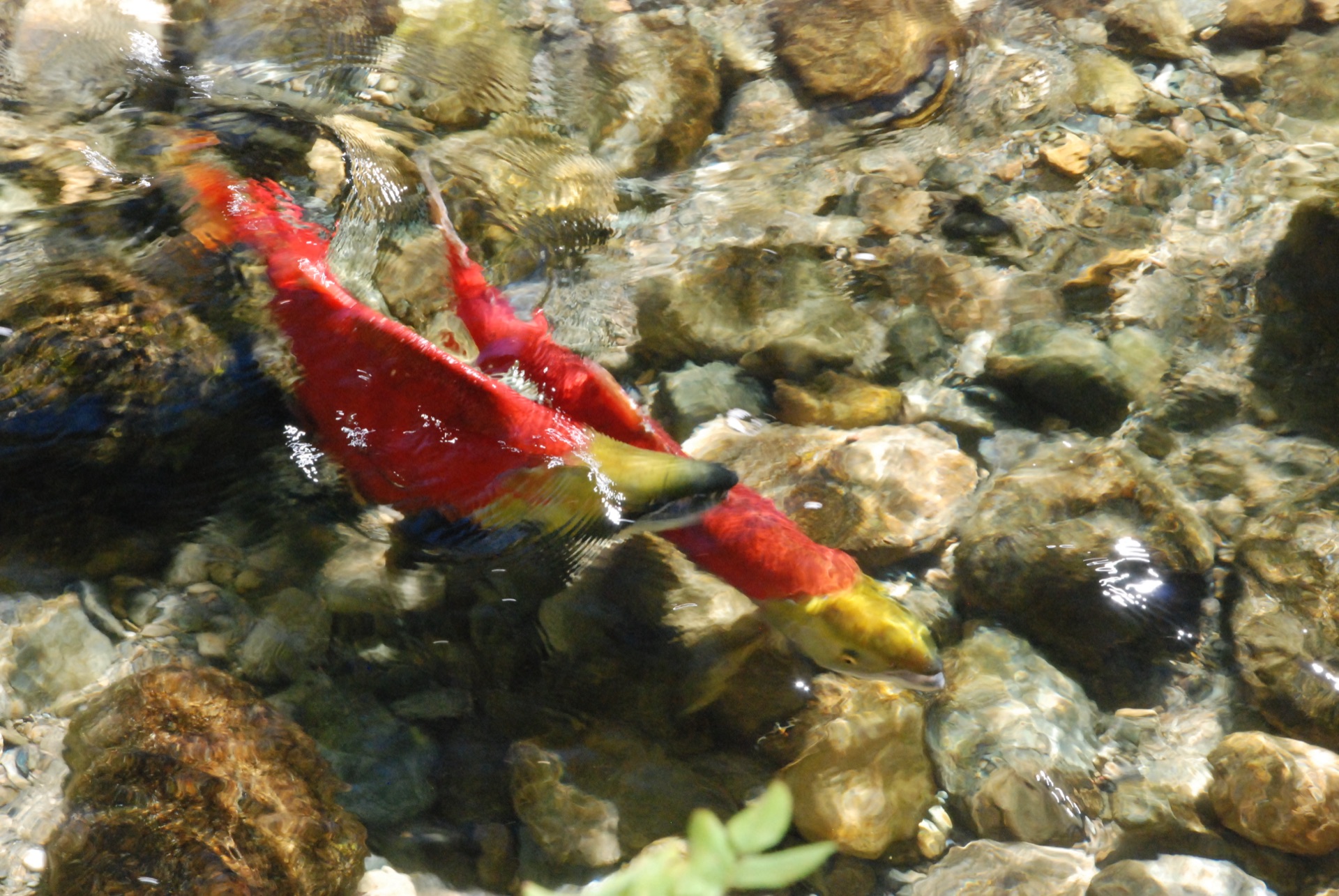
Sockeye salmon entering the river mouth in June — silver flanks just beginning to flush crimson, the lake still weeks upstream.
物の哀れ · Mono no Aware
They spent three years building those bodies in the open ocean. Now they burn every calorie in one upstream sprint that ends in the gravel.
What the season brings?
Early June marks the beginning of sockeye salmon (Oncorhynchus nerka) runs into Pacific Northwest rivers, with these brilliant red fish entering river mouths and beginning their upstream migration toward glacial lakes and tributaries. Sockeye are unique among Pacific salmon in requiring lakes for juvenile rearing, with most populations spawning in streams connected to large lakes like Lake Washington, Baker Lake, and numerous British Columbia systems. As sockeye transition from ocean to freshwater, their bodies transform from silver-blue to brilliant crimson red with green heads, creating one of nature's most dramatic color changes. These fish typically spend 2-3 years in the ocean before returning, and their runs can number in the millions in productive years. Sockeye are highly prized for their rich, oily flesh and represent crucial cultural, ecological, and economic resources throughout the Pacific Northwest.
Convergence chain
Triggered by
Sockeye salmon time river entry to when flows are adequate but before temperatures become lethal; their imprinting on natal lake chemistry guides them through hundreds of miles of open ocean back to specific tributaries; Lake Washington sockeye navigate the Hiram Chittenden Locks — one of the most observable salmon runs in an urban setting
Enables
Sockeye are the most abundant Pacific salmon, making them the most important nutrient vector into freshwater; their lake-spawning delivers marine nutrients directly to lake productivity; carcasses in lakes fertilize phytoplankton and zooplankton, improving food availability for the juvenile sockeye that will emerge the following spring
The cascade
Snowmelt pulse holds rivers cool → sockeye enter in thousands → osprey concentrate at Hiram Chittenden Locks → sockeye reach natal lakes → mass spawning and die-off → carcasses decompose and release marine nitrogen into lake water → phytoplankton bloom follows the pulse → zooplankton populations increase → juvenile sockeye emerging next spring have more food than they would without the nutrient subsidy → returning adults have effectively fertilized their own offspring's food supply
Foods to Mark the Season
Rainier cherry season opens from Hood River and the Yakima Valley—these iconic cream-and-blush sweet cherries have a narrow 4–6 week window and are highly perishable. Willamette Valley strawberries are at full production peak. Recreational Dungeness crab season opens in South Puget Sound (Marine Area 13) in early June, beginning the prime summer crabbing season.
Events This Season
Sisters, OR, first weekend of June. An intimate, volunteer-run festival in the ponderosa forests of the eastern Cascades — home to eleven nesting woodpecker species. Small field trip groups (max 10 participants) led by expert local birders from East Cascades Bird Alliance, with burned-forest outings targeting black-backed and three-toed woodpeckers in the same week sockeye begin entering river mouths to the west.
festivals / oregon / dean-hale-woodpecker-weekend →Frequently Asked Questions
Visions of the Season
Read more
Each microseason is approximately 5 days, marking the subtle changes in nature throughout the year.