Skunk Cabbage Unfurls
Skunk Cabbage Unfurls
8/72: Feb 4 to 8
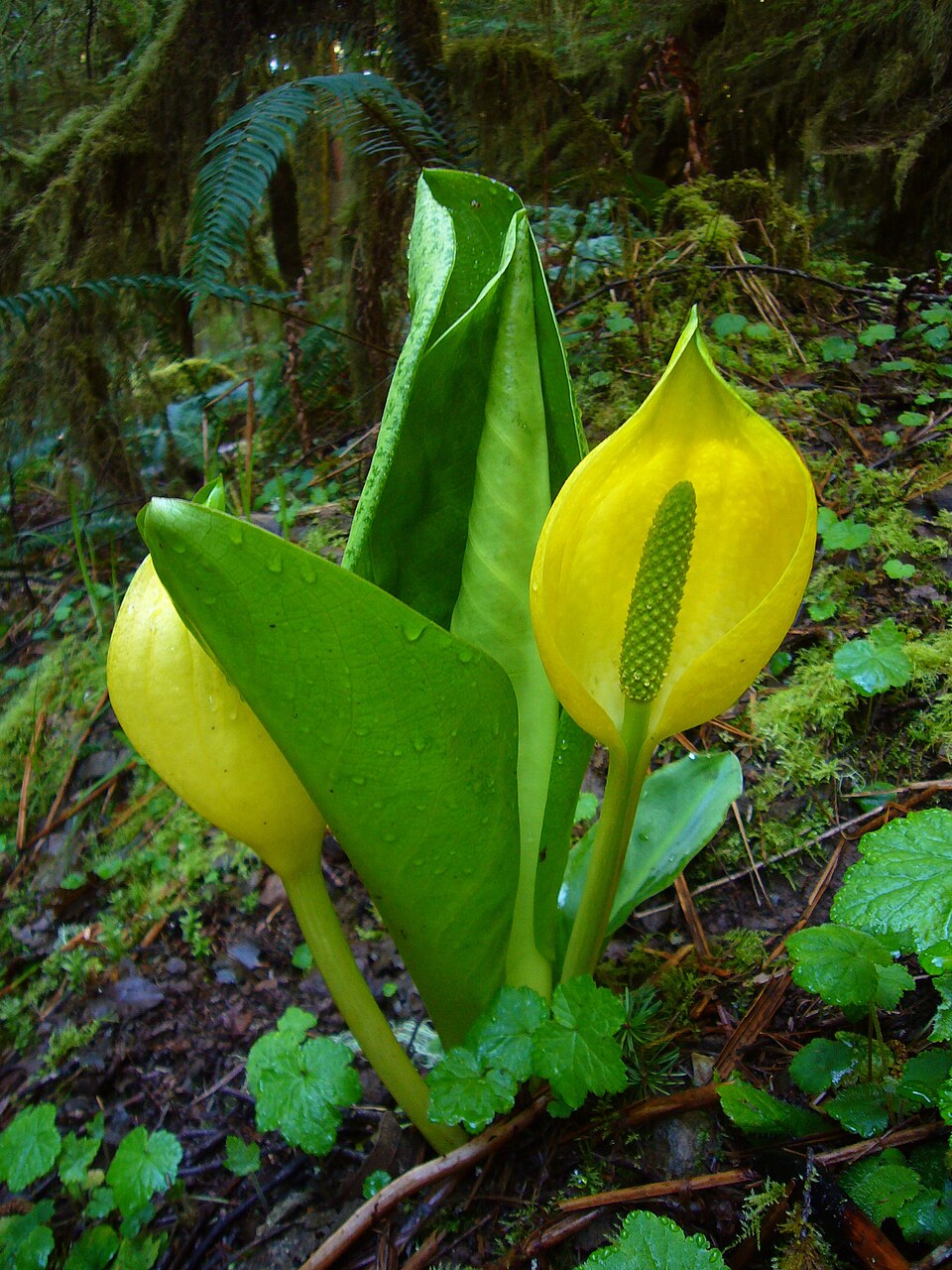
Skunk cabbage unfurls in wetlands. Yellow spathes pierce the swamp's cold gloom.

風物詩 · Fūbutsushi
A yellow skunk cabbage spathe open wide in a February wetland — winter's most outrageous color, rising from black water and ice.
物の哀れ · Mono no Aware
By April the spathes will have browned and collapsed, and the swamp will look ordinary again. For now it is February's only fire.
What the season brings?
Early February marks the full emergence of skunk cabbage (Lysichiton americanus) across Pacific Northwest wetlands, with bright yellow spathes unfurling to reveal the complex flowering spadix inside. These dramatic plants, which can generate heat through thermogenesis to melt through late snow, create splashes of brilliant yellow in otherwise muted winter landscapes. The yellow spathe serves as a hood protecting the actual flower spike, while the plant's distinctive skunk-like odor attracts early-season fly and beetle pollinators. Look for these plants in swamps, along streams, and in wet forests from southwest British Columbia through Oregon, where they often form large colonies. Indigenous peoples throughout the region traditionally used skunk cabbage leaves for lining berry baskets and cooking pits, though the raw plant contains calcium oxalate crystals that make it toxic without proper preparation.
Convergence chain
Triggered by
Lysichiton americanus's internal thermogenesis drives the spathe to full height and opening — no external warmth trigger needed; the plant generates its own heat, making the spathe interior 15-22°C above ambient air temperature regardless of weather
Enables
Full pollen availability for the first bees and fungus gnats of the season; bears emerging from winter torpor consume the calcium-rich leaves despite their oxalate content; the standing heat and scent compounds at maximum volatilization attract the broadest early pollinator diversity of any single plant event
The cascade
Spathe opens fully and thermogenesis peaks → scent compounds maximize → fungus gnats and stoneflies enter the warm spathe and contact pollen → first overwintering bumblebee queens arrive at the heat source → bears tear up wetland edges consuming the emerging leaves → disturbed soil exposes earthworms and grubs → first great blue herons of the year probe the freshly churned edges → the wetland food web reactivates from a single thermogenic plant
Foods to Mark the Season
Stinging nettles push up their first tender shoots in damp lowland areas—stream banks and disturbed rich soils from BC south to the Willamette Valley. Miner's lettuce (*Claytonia perfoliata*) begins appearing on shaded forest floors and roadsides, one of the earliest forageable greens of the year.
Events This Season
Arlington, WA, first weekend of February. Free two-day festival celebrating bald eagles wintering on the Stillaguamish River — naturalist-led wildlife viewing walks, live raptor demonstrations, and a chainsaw carving competition at Legion Park. As skunk cabbage unfurls in the river's wetlands, the eagles are still concentrated on late-season chum carcasses along the Stilly's cottonwood banks.
events / washington / arlington-stillaguamish-eagle-festival →Frequently Asked Questions
Visions of the Season
Related Videos
Read more
Each microseason is approximately 5 days, marking the subtle changes in nature throughout the year.