Mushroom Season Peaks
Mushroom Season Peaks
61/72: Nov 2 to 6
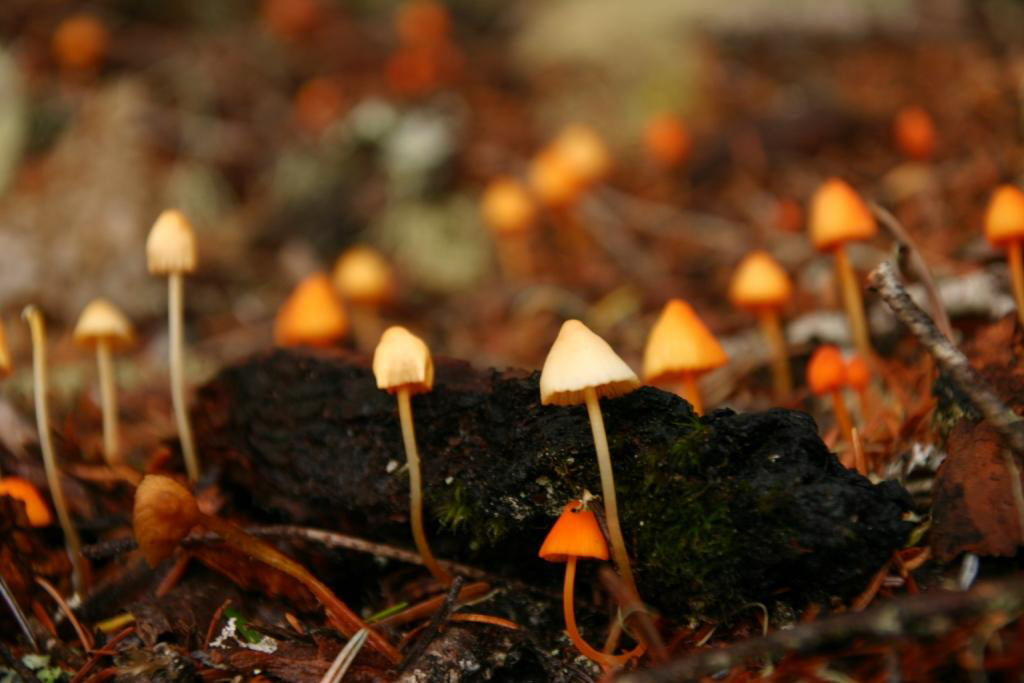
Mushroom season reaches its zenith. Maximum diversity, the fungal feast.

風物詩 · Fūbutsushi
The Pacific Northwest forest floor in early November — golden chanterelles, hedgehog mushrooms, and scattered king boletes all fruiting in the same stand of Douglas-fir, the year's richest moment.
物の哀れ · Mono no Aware
By December the season will wind down and the forest floor will be quiet again. This week of simultaneous chanterelles, hedgehogs, and king boletes comes once a year and not for long.
What the season brings?
October-November represents the absolute peak for mushroom diversity and abundance in Pacific Northwest forests. Look for chanterelles (golden trumpets returning to the same spots annually), matsutake still fruiting in its October peak window, hedgehog mushrooms beginning their season, cauliflower mushrooms (rare finds at Douglas fir bases), king boletes, and the toxic-but-beautiful amanitas now dotting the forest floor with their red-and-white fairy tale caps.
Convergence chain
Triggered by
Season 52: Chanterelles Erupt and Season 55: Matsutake Return — November rains deepen the fall fungal flush; accumulated organic matter from leaf fall providing substrate; forest canopy opening as deciduous trees drop leaves allowing rain to reach soil
Enables
Peak diversity of edible fungi draws the highest concentration of foragers into old-growth and second-growth forests; mycorrhizal network at maximum activity transfers carbon between trees before winter dormancy; rodent populations at annual high from fungal food abundance, sustaining raptors into December
The cascade
November rains combine with fallen leaf substrate → chanterelles, hedgehogs, lobsters, black trumpets, and cauliflower mushrooms fruit simultaneously → foragers converge on forests → trampling and spore dispersal by boots accelerates inoculation of new substrate → rodents cache fungi, spreading spores further → mycorrhizal network reaches peak connectivity → Douglas fir transfers last sugars to network before needles reduce photosynthesis
Foods to Mark the Season
Chanterelles continue and may peak in a wet November—Oregon's Coast Range and western Cascades are still producing through the first weeks of November. Olympia oysters (*Ostrea lurida*)—the only oyster native to the Pacific coast—are at their cleanest and most flavorful in cold fall water; Puget Sound's Totten and Eld Inlets are key producers. Chum salmon runs continue in Washington rivers, and Oregon commercial Dungeness crab season opens December 1.
Frequently Asked Questions
Visions of the Season
Read more
Each microseason is approximately 5 days, marking the subtle changes in nature throughout the year.