Herring Spawn
Herring Spawn
15/72: Mar 11 to 15
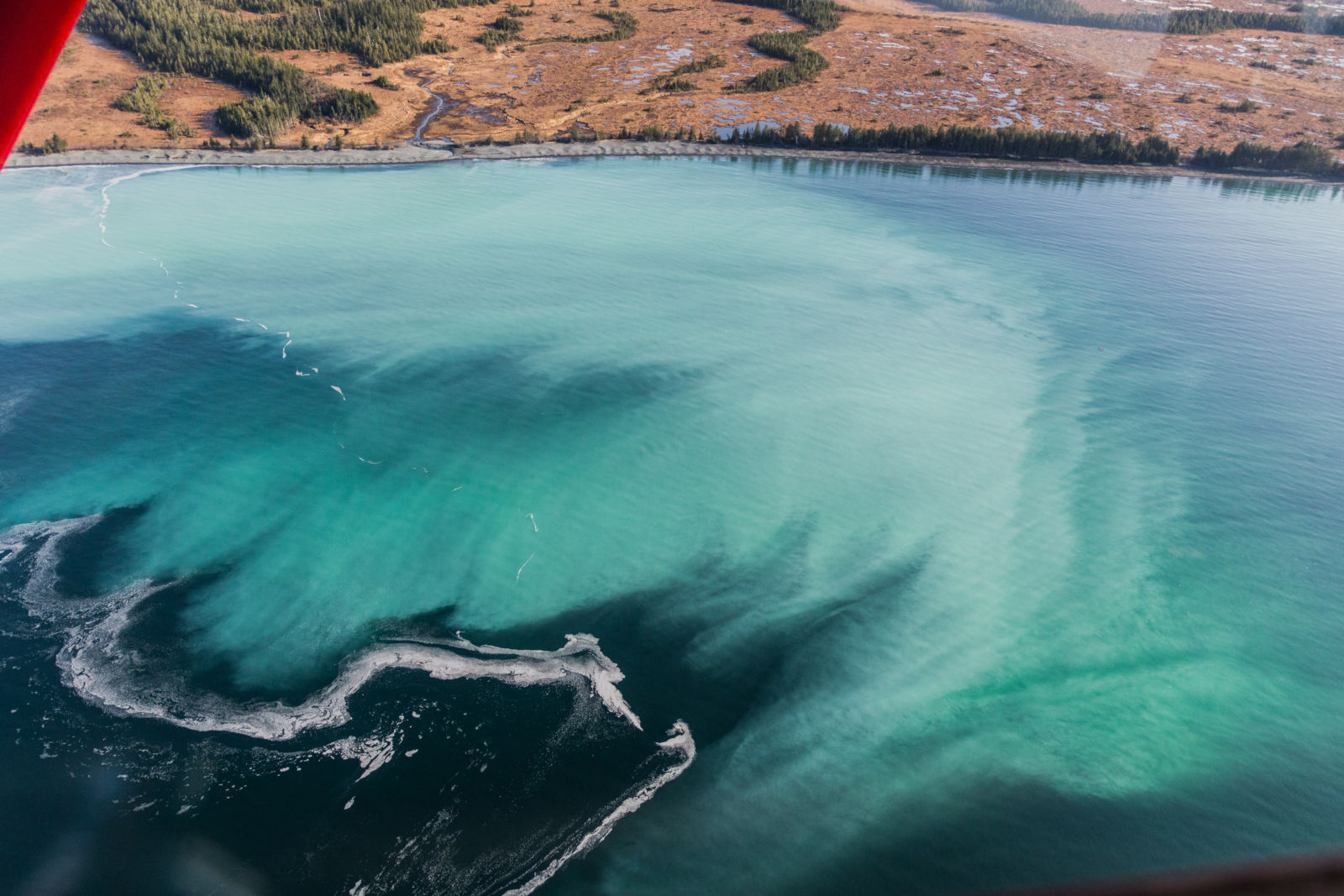
Herring turn the bays milky white. Billions of eggs, the sea transformed.

風物詩 · Fūbutsushi
Pacific herring spawning in Penn Cove — the water running milky white, every eagle and seal on the bay converging on the event.
物の哀れ · Mono no Aware
In two weeks the water will clear, the herring will be gone, and the bay will look like any other bay. The eagles will disperse. The seal will sink back into deep water.
What the season brings?
Mid-March marks the peak of Pacific herring (Clupea pallasii) spawning in Puget Sound and other protected bays throughout the Pacific Northwest. This spectacular annual event transforms nearshore waters, turning them milky white from billions of eggs laid on eelgrass, kelp, and other substrates. Male herring release milt that clouds the water, creating the characteristic whitish appearance that can be visible for miles. Herring spawning attracts massive congregations of wildlife including sea lions, harbor seals, humpback whales, bald eagles, gulls, and diving ducks, all feeding on the nutrient-rich spawn and spawning fish. Traditional indigenous peoples throughout the region harvested herring eggs on kelp fronds, and this event remains culturally significant to Coast Salish and other tribes. The spawning typically lasts 2-3 weeks and represents one of the Pacific Northwest's most important ecological events.
Convergence chain
Triggered by
Nearshore water temperature reaching 7–10°C; lengthening photoperiod triggering gonadal maturation in Pacific herring; eelgrass beds and kelp fronds available as spawning substrate
Enables
Bald eagle concentration along coastal corridors (Season 66: Eagles Gather); great blue heron foraging surge; harbor seal and California sea lion arrival at spawning sites; surf scoter and Western grebe aggregations; nutrient pulse into nearshore kelp beds via decomposing egg masses
The cascade
Billions of Pacific herring coat eelgrass beds in milky white milt → dense roe carpet draws every predator on the bay → eagles line the cottonwoods, herons pack the shallows, sea lions work the bait balls offshore → egg mass nutrients cycle into kelp forest through spring → kelp canopy recovery fuels next winter's rockfish cohort
Foods to Mark the Season
Wild ramps and onion greens are findable in riparian woodlands; the earliest yellow morel mushrooms may begin appearing near cottonwood and ash groves along low-elevation river valleys—the leading edge of morel season. Spring Chinook fishing is active on the Willamette and lower Columbia, and razor clam digs continue on Washington ocean beaches through late March.
Things to Do
Attend **HerringFest** on Hornby Island (BC), a community celebration of the Pacific herring spawn held each spring — featuring guided shoreline walks, Indigenous teachings, and family-friendly events around one of the Salish Sea's most important ecological events. Learn more at [conservancyhornbyisland.org/herringfest](/events/british-columbia/herringfest).
Events This Season
Hornby Island, BC, early March. A multi-day community festival celebrating the Pacific herring spawn in the Salish Sea — featuring guided boat tours over milky spawning waters, Indigenous teachings, the Herring School lecture day, and the Herring Ball community dance.
events / british-columbia / herringfest →Comox Valley and Parksville, Vancouver Island, BC, late February–mid April. Milky turquoise water, eagles massed along the shore, sea lions hauling out on every exposed rock — the spawn is announced by the wildlife before it's visible in the water. Free public viewing at Parksville Bay and Comox estuary; follow the wildlife concentrations to find the densest aggregations.
events / british-columbia / pacific-herring-spawn →Tofino and Ucluelet, Vancouver Island, BC, mid-March. Grey whales migrating north along Vancouver Island's west coast make feeding stops in coastal waters specifically because of the herring spawn — the roe-laden intertidal zones provide a critical high-energy refueling station on their journey from Baja to Alaska. The festival runs during the peak of both the spawn and the migration.
events / british-columbia / pacific-rim-whale-festival →
This Season’s Podcast
The Pacific Herring - Visible from Space
Pacific herring turn the bays milky white — billions of eggs, and the cascade of life that follows.
Frequently Asked Questions
Visions of the Season
Read more
Each microseason is approximately 5 days, marking the subtle changes in nature throughout the year.