Oregon Grape Glows
Oregon Grape Glows
19/72: Mar 31 to Apr 4
Oregon grape glows golden. Honey-scented clusters light the shadowed woods.

風物詩 · Fūbutsushi
Oregon grape in full bloom on an April morning — dense golden clusters in the shadowed understory, the whole forest glade smelling of honey.
物の哀れ · Mono no Aware
The perfume vanishes by May, when the flowers fade to small green berries. The scented moment is shorter than it seems.
What the season brings?
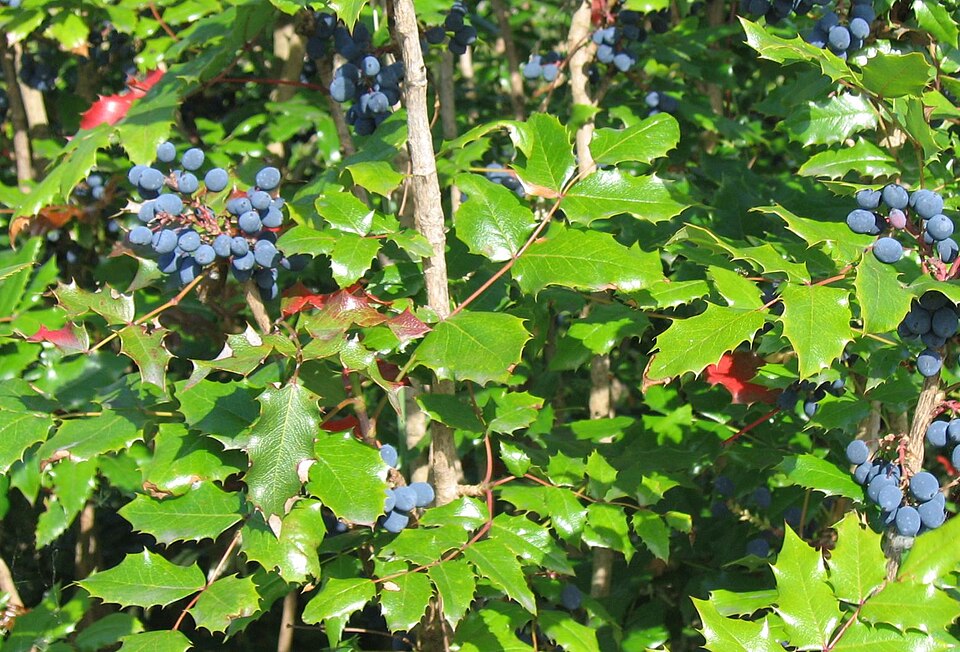
Late March through early April brings the spectacular flowering of Oregon grape (Mahonia aquifolium and M. nervosa), Washington's official state flower, with bright golden-yellow flower clusters that light up shaded forests. These evergreen shrubs produce dense racemes of honey-scented flowers that attract early-season bees, butterflies, and other pollinators. Tall Oregon grape (M. aquifolium) grows 3-6 feet with glossy, holly-like leaves, while low Oregon grape (M. nervosa) forms ground-covering colonies in deep forest shade. The flowers develop into edible blue-purple berries by summer, which were traditionally used by indigenous peoples for food and medicine. Oregon grape's roots contain berberine, a compound with antimicrobial properties still used in herbal medicine today. Look for these brilliant yellow displays in coniferous forests, mixed woodlands, and native plant gardens throughout the Pacific Northwest.
Convergence chain
Triggered by
Mahonia aquifolium blooms when day length crosses approximately 12.5 hours and temperatures are reliably above 10°C; its woody evergreen structure allows early bloom without frost risk to foliage — the leaves can survive freezing while the flowers are open
Enables
Bright yellow flower clusters provide substantial pollen and nectar, sustaining bumblebee queens at the critical colony-building phase when worker production determines colony success; berries ripening in August feed cedar waxwings, Townsend's warblers, and bears; evergreen leaves provide winter cover for forest-floor invertebrates
The cascade
Oregon grape clusters open in early April → bumblebee queens provisioning early nests collect heavy pollen loads → nest growth accelerates in colonies that located Oregon grape patches → berry development through summer → August ripening coincides with warbler migration → cedar waxwings arriving from the north strip berry clusters → seeds dispersed into forest gaps → Oregon grape germinates preferentially in partial shade, spreading slowly under aging canopy
Foods to Mark the Season
Yellow morel season moves into full swing in river valleys—Columbia and Willamette riverside cottonwood zones are the premier morel habitat in the Pacific Northwest. Salmonberry (*Rubus spectabilis*) shoots are edible spring greens before the plant flowers. Fiddleheads remain harvestable at mid-elevations, and Columbia River spring Chinook is at or near its lower-river peak.
Events This Season
Skagit County, WA, April 1–30. The largest tulip festival in North America draws over a million visitors to working bulb farms across the Skagit delta. The opening days coincide with Oregon grape and red currant in bloom throughout the valley hedgerows.
events / washington / skagit-valley-tulip-festival →Portland, OR, early April. Native wildflower celebration in one of Portland's old-growth forest corridors, timed to peak trillium and Oregon grape bloom.
events / oregon / trillium-festival-tryon-creek →
This Season’s Podcast
Oregon Grape: From Psoriasis to Purple Curd
Oregon grape's golden flowers and tart blue berries have fed and healed Pacific Northwest communities for centuries — from Indigenous medicine to modern kitchens.
Frequently Asked Questions
Visions of the Season
Read more
Each microseason is approximately 5 days, marking the subtle changes in nature throughout the year.