Marmots Whistle
Marmots Whistle
33/72: Jun 10 to 14
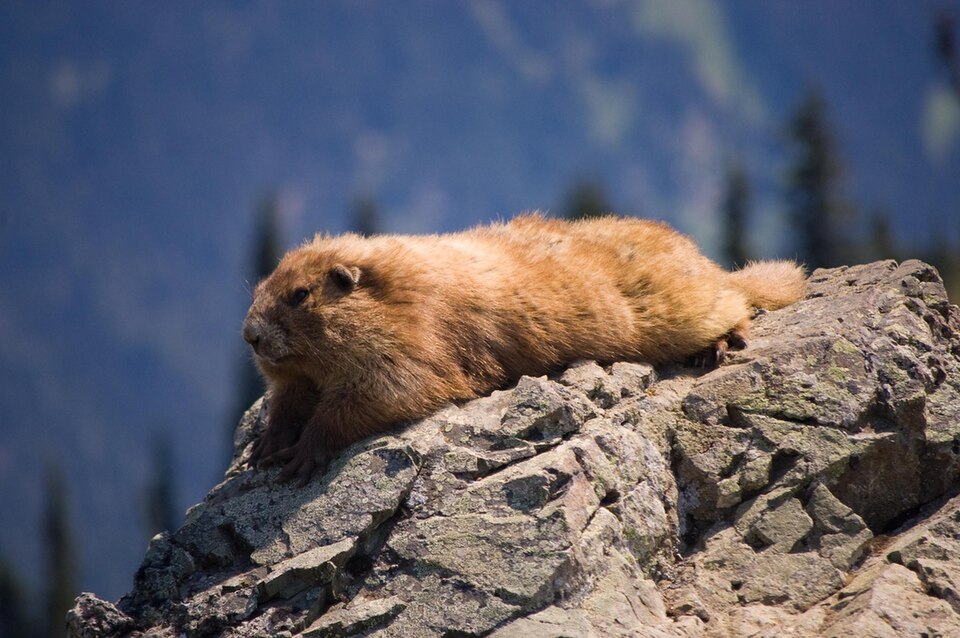
Marmots whistle from talus slopes. Olympic's endemic children, emerged and breeding.

風物詩 · Fūbutsushi
An Olympic marmot whistling from a boulder above a subalpine meadow — a species found nowhere else on Earth, sunning itself in the brief mountain summer.
物の哀れ · Mono no Aware
By September they will be underground again for eight months. Their whole visible life — courting, breeding, raising young, fattening — fits into three short months on the alpine slopes.
What the season brings?
Mid-June brings the peak activity period for Olympic marmots (Marmota olympus), a species found nowhere else on Earth except in the Olympic Mountains of Washington. These endemic rodents emerge from hibernation in May and spend the short mountain summer feeding intensively on alpine vegetation, sunbathing on rocks, and raising young. Olympic marmots are highly social, living in colonies on talus slopes and subalpine meadows above 5,000 feet elevation. Their loud, piercing whistle calls serve as alarm signals and help maintain colony cohesion. These charismatic animals, weighing 8-20 pounds, are the largest members of the squirrel family in Washington and spend 8 months of each year hibernating underground. Climate change threatens Olympic marmots as earlier snowmelt and changing vegetation patterns alter their alpine habitat, making this endangered species a conservation priority.
Convergence chain
Triggered by
Olympic marmots (Marmota olympus — found nowhere else on Earth) emerge from 7-8 months of hibernation when snowpack at high elevation melts enough to expose burrow entrances; their emergence timing tracks the snowpack melt date, which tracks winter precipitation and spring temperature
Enables
Marmot emergence triggers golden eagle hunting activity from cliff nest sites above colonies; coyotes that moved to subalpine zones in summer concentrate near colonies; marmot colony health is a direct indicator of Olympic Peninsula ecosystem integrity; the whistled alarm calls create a warning network benefiting ptarmigan, pikas, and ground squirrels on the same slopes
The cascade
Olympic snowpack melts enough to uncover burrow entrances → marmots emerge from hibernation and reestablish family group territories → golden eagles nesting on Olympic ridgelines begin hunting marmot colonies → coyotes and black bears also target marmots → marmot alarm calls trigger vigilance behavior across the entire subalpine community → the marmot colony functions as an early-warning system for every ground-dwelling creature on the mountain
Foods to Mark the Season
Rainier and Bing cherries from Hood River and Yakima are at peak harvest—Hood River is one of the nation's most important cherry-growing regions, producing both sweet varieties. Oregon grape (*Mahonia aquifolium*) berries are forming on their distinctive blue-green clusters, ripening to tart blue-purple berries used for jelly and syrup. Local sugar snap peas, lettuces, and early summer vegetables are at peak abundance at PNW farmers markets.
Frequently Asked Questions
Visions of the Season
Read more
Each microseason is approximately 5 days, marking the subtle changes in nature throughout the year.