Larch Turns Gold
Larch Turns Gold
54/72: Sep 28 to Oct 2
Larch forests turn to gold. Deciduous conifers blazing before the snow.

風物詩 · Fūbutsushi
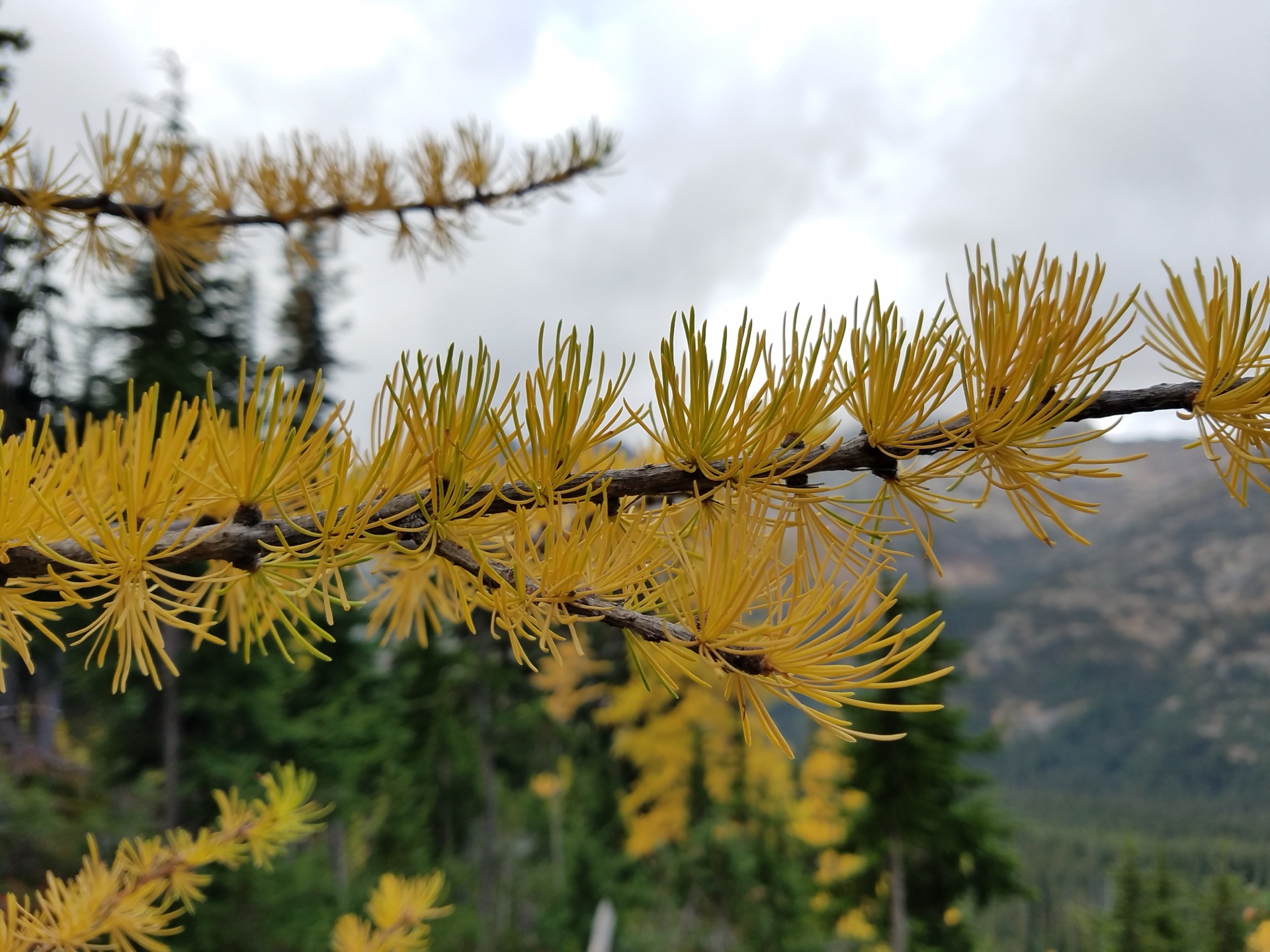
Subalpine larch turning gold above the Enchantments in late September — deciduous conifers blazing among the rock and glaciers, the rarest autumn display in the range.
物の哀れ · Mono no Aware
The needles hold their gold for only two weeks. Then the first hard wind strips them bare, and the slope returns to gray rock and dark fir. This blazing is brief by design.
What the season brings?
Late September through early October brings spectacular golden displays as western larch (Larix occidentalis) and subalpine larch (Larix lyallii) transform high-elevation forests throughout the Cascades and northeastern Washington. These deciduous conifers—unusual trees that drop their needles each fall—turn brilliant golden-yellow before shedding, creating stunning displays visible for miles. Western larch grows at mid to high elevations (2,000-7,000 feet) in the eastern Cascades and northeastern Washington, while subalpine larch occupies the highest elevations (5,000-8,000 feet) near timberline. The trees often grow in pure stands or mixed with other conifers, and their golden needles contrast dramatically with surrounding evergreens. Peak larch color typically occurs in late September in the North Cascades and early October in more southern locations. Popular larch viewing destinations include the Enchantments, Maple Pass, and numerous other high-country trails.
Convergence chain
Triggered by
Western larch (Larix occidentalis), the only deciduous conifer in the PNW, turns golden when nights consistently drop below 5°C — its deciduous habit is an adaptation to the crushing snowpack loads of the interior Cascades, where keeping needles through winter would snap branches
Enables
The fall display draws human observers into eastern Cascade forests that harbor wolverines, grizzly bears, and Canada lynx — species that need intact large landscapes and broad public awareness for conservation; larch needle fall in October creates a distinctive nutrient pulse; the open winter canopy allows light to understory, accelerating shrub growth below
The cascade
Cold September nights trigger larch needle senescence → needles turn gold → needles fall by late October → decomposing larch needles have unusual chemistry supporting specific decomposer fungi → those fungi are mycorrhizal with adjacent pine and spruce → the larch needle layer insulates soil through winter → seeds buried under larch needles have superior germination rates in spring → larch's unique deciduous habit drives the entire understory phenology beneath it
Foods to Mark the Season
Chanterelles, king boletes, and matsutake are all simultaneously findable—the richest mushroom foraging window of the year in the Pacific Northwest. Chum salmon (*Oncorhynchus keta*) runs build in Hood Canal tributaries and coastal rivers, their roe a prized delicacy. Willamette Valley and Walla Walla grape harvests continue, and Hood River pears and apples are at peak.
Frequently Asked Questions
Visions of the Season
Read more
Each microseason is approximately 5 days, marking the subtle changes in nature throughout the year.