Hummingbirds Vanish
Hummingbirds Vanish
43/72: Aug 3 to 7
Hummingbirds vanish southward. Males first, then mothers with fledglings.

風物詩 · Fūbutsushi
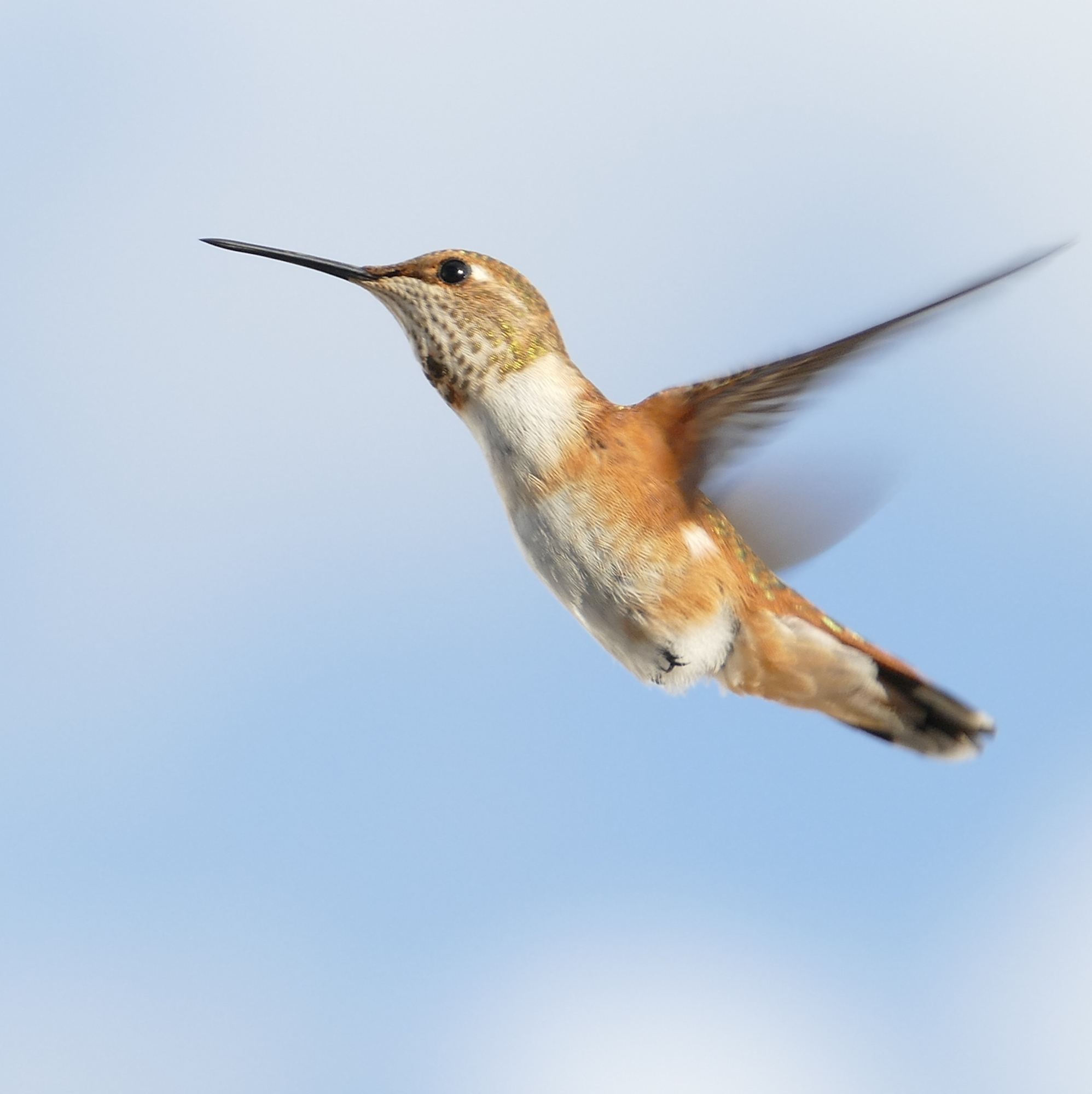
A rufous hummingbird at a late-summer feeder in early August — not feeding, just hovering briefly, already oriented south before disappearing into the trees.
物の哀れ · Mono no Aware
The feeder empties more slowly now. You check it in the morning and realize you haven't seen one in days. They left without announcement.
What the season brings?
Early August marks the beginning of southward rufous hummingbird migration, with adult males departing first followed by females and juveniles over the coming weeks. After breeding in the Pacific Northwest through summer, these tiny migrants begin their remarkable 3,000+ mile journey back to Mexican wintering grounds. Males typically depart in late July through early August, while females with late-season nestlings may linger into September. The migration follows mountain ranges southward, with birds stopping frequently to refuel at flowering plants and feeders. Rufous hummingbirds are among the most aggressive hummingbird species, and their departure signals the approaching end of summer. Keep feeders filled through September to support late migrants, and watch for the final juveniles making their first southward journey—a remarkable feat for birds weighing only 3-4 grams.
Convergence chain
Triggered by
Rufous hummingbirds begin southbound migration when photoperiod drops below a species-specific threshold in early August — not because food is scarce, but because their internal calendar responds to day length; males leave first, then females and juveniles, vacating territories while flowers are still abundant
Enables
Departure of aggressive rufous releases Anna's hummingbirds from territorial pressure; vacated territories become available to migrating Calliope and Black-chinned hummingbirds moving through; late-flowering plants that were heavily guarded by rufous now receive pollen from diverse visitors
The cascade
Photoperiod drops below rufous threshold → rufous males depart first → females and juveniles follow within 2 weeks → Anna's hummingbirds immediately expand territory size and reduce stress behavior → Calliope and Black-chinned hummingbirds pass through the vacated corridors → late-blooming Epilobium and Monardella receive more diverse pollinators → the hummingbird chapter closes until Anna's begin nesting in February
Foods to Mark the Season
In odd years, pink salmon (*Oncorhynchus gorbuscha*) fishing hits peak intensity in Puget Sound, especially Marine Areas 9 and 10 around Whidbey Island and the San Juan Islands. Fall Chinook are building in ocean fisheries and lower rivers. Cascade huckleberries continue expanding in ripeness from 2,000 to 4,000 ft throughout the Washington and Oregon Cascades. Sweet corn from Skagit Valley is widely available.
Frequently Asked Questions
Visions of the Season
Read more
Each microseason is approximately 5 days, marking the subtle changes in nature throughout the year.