First Frost Silvers
First Frost Silvers
59/72: Oct 23 to 27
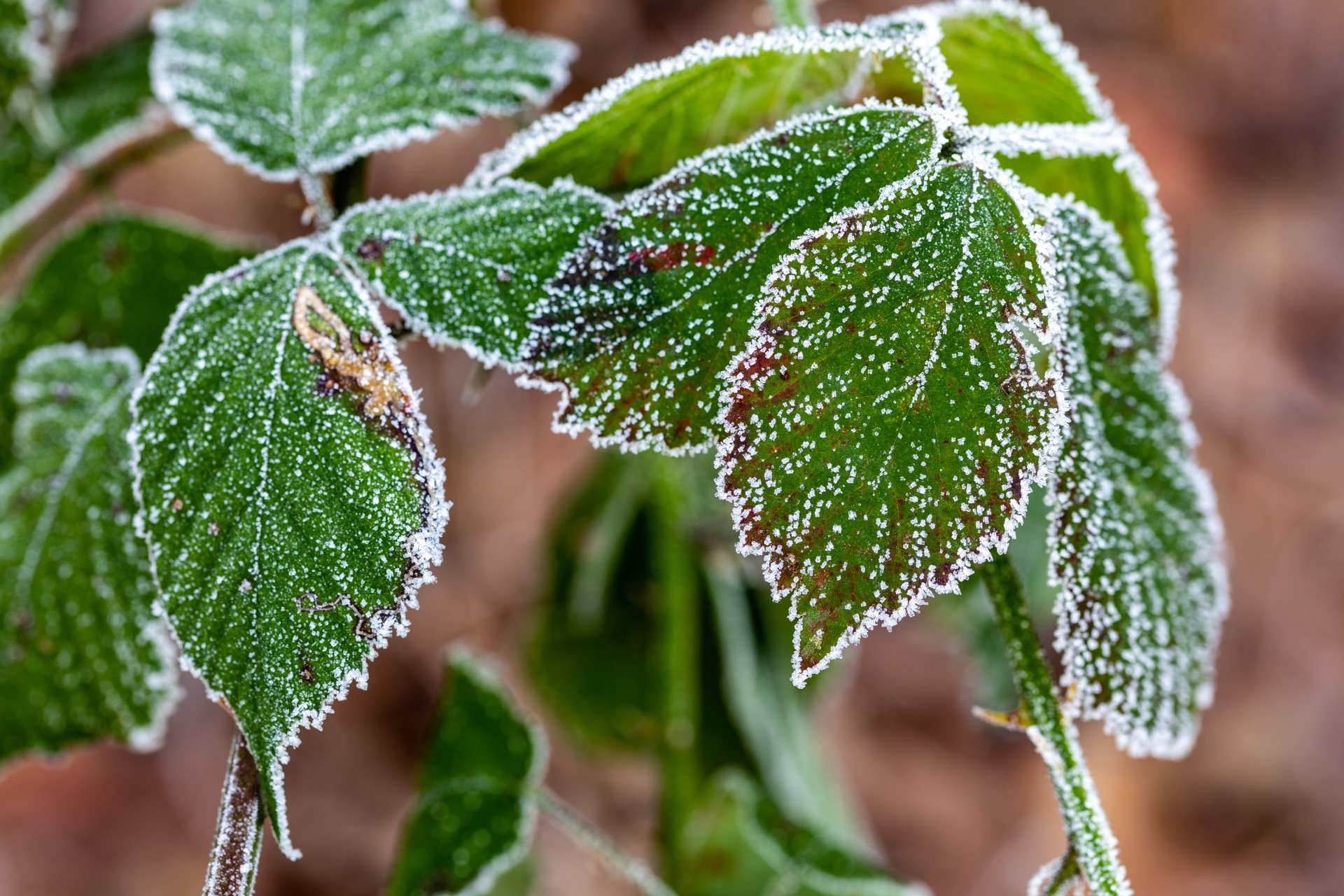
First frost silvers the lowlands. Pumpkin vines glisten with ice.

風物詩 · Fūbutsushi
The first frost silvering the lowlands in late October — ice crystals on every grass blade, the pumpkin vine gone black, the growing season over in a single night.
物の哀れ · Mono no Aware
By noon the frost is gone and the garden looks almost normal. Only the blackened tomato leaves show what happened in the night. The garden year has ended quietly.
What the season brings?
Late October typically brings the first killing frost to Pacific Northwest lowlands, with overnight temperatures dropping to 28-32°F and coating vegetation with delicate ice crystals. These first frosts transform gardens overnight, turning pumpkin and squash vines black, killing tender annuals, and creating ephemeral displays of frost-silvered grass and spider webs glistening in morning light. The timing of first frost varies considerably across the region—valley bottoms and areas prone to cold air drainage may see frost in mid-October, while areas near water or on slopes may not experience killing frost until November. First frost marks an important phenological transition, triggering leaf drop in many deciduous trees, ending the growing season for frost-sensitive plants, and signaling wildlife to complete winter preparations. The beauty of frost-silvered landscapes provides consolation for summer's definitive end.
Convergence chain
Triggered by
Clear calm nights when radiative cooling drops the surface temperature below 0°C; typically late October in the Willamette Valley and Puget Sound lowlands; the date is highly variable year to year, but the ecological responses to it are immediate and predictable
Enables
Frost triggers cellular breakdown in frost-sensitive plants, softening rose hips, hawthorn, and crabapple — making them suddenly palatable to birds that ignored the hard fruit; frost kills the last flying insects; late-season fungi (oyster, velvet foot) continue fruiting, being cold-tolerant; frost cues bears to accelerate denning preparation
The cascade
First frost crystallizes cellular water in frost-sensitive berry crops → cell walls rupture and soften → cedar waxwings descend on hawthorn and crabapple immediately → the same cold snap accelerates bear hyperphagia — bears sense the approach of denning season → last bumblebee queens find overwintering sites in October soil → American woodcock concentrate in flooded alder bottoms for final worm-feeding before freeze → the season's last insects die
Foods to Mark the Season
Late-October chanterelles and hedgehog mushrooms continue in western Oregon and Washington, with chum salmon persisting on the coast through November. Stored apples (Fuji, Granny Smith) and fresh pears from Hood River fill farmstand shelves across eastern Washington and the Columbia Gorge. Oregon hazelnut harvest wraps up for the season, and Walla Walla wine harvest concludes.
Events This Season
Seattle, WA (Center for Urban Horticulture), last weekend of October. The Puget Sound Mycological Society's annual show — 200+ Pacific Northwest mushroom species on display, expert identification, vendors, and cooking demonstrations. One of the largest mushroom exhibitions in the US, held as the first frost descends on the mountains and the lower-elevation flush peaks.
events / washington / psms-annual-wild-mushroom-show →Portland, OR (World Forestry Center), last Sunday of October. OMS members display identified Pacific Northwest mushroom species with expert interpretation and a free public identification service — the Portland counterpart to Seattle's PSMS show, held the same weekend.
events / oregon / oregon-mycological-society-fall-show →Eugene, OR, last Sunday of October. Annual celebration of the Pacific golden chanterelle — Oregon's state mushroom — at the Mount Pisgah Arboretum's oak woodland and riparian forest, organized by the Cascade Mycological Society. The arboretum's intact oak and Douglas fir habitat is both the festival setting and the source of specimens on display.
events / oregon / mount-pisgah-arboretum-mushroom-festival →Frequently Asked Questions
Visions of the Season
Read more
Each microseason is approximately 5 days, marking the subtle changes in nature throughout the year.