Camas Floods Meadows
Camas Floods Meadows
24/72: Apr 25 to 29
Camas meadows become inland seas. Blue waves that sustained the first peoples.

風物詩 · Fūbutsushi
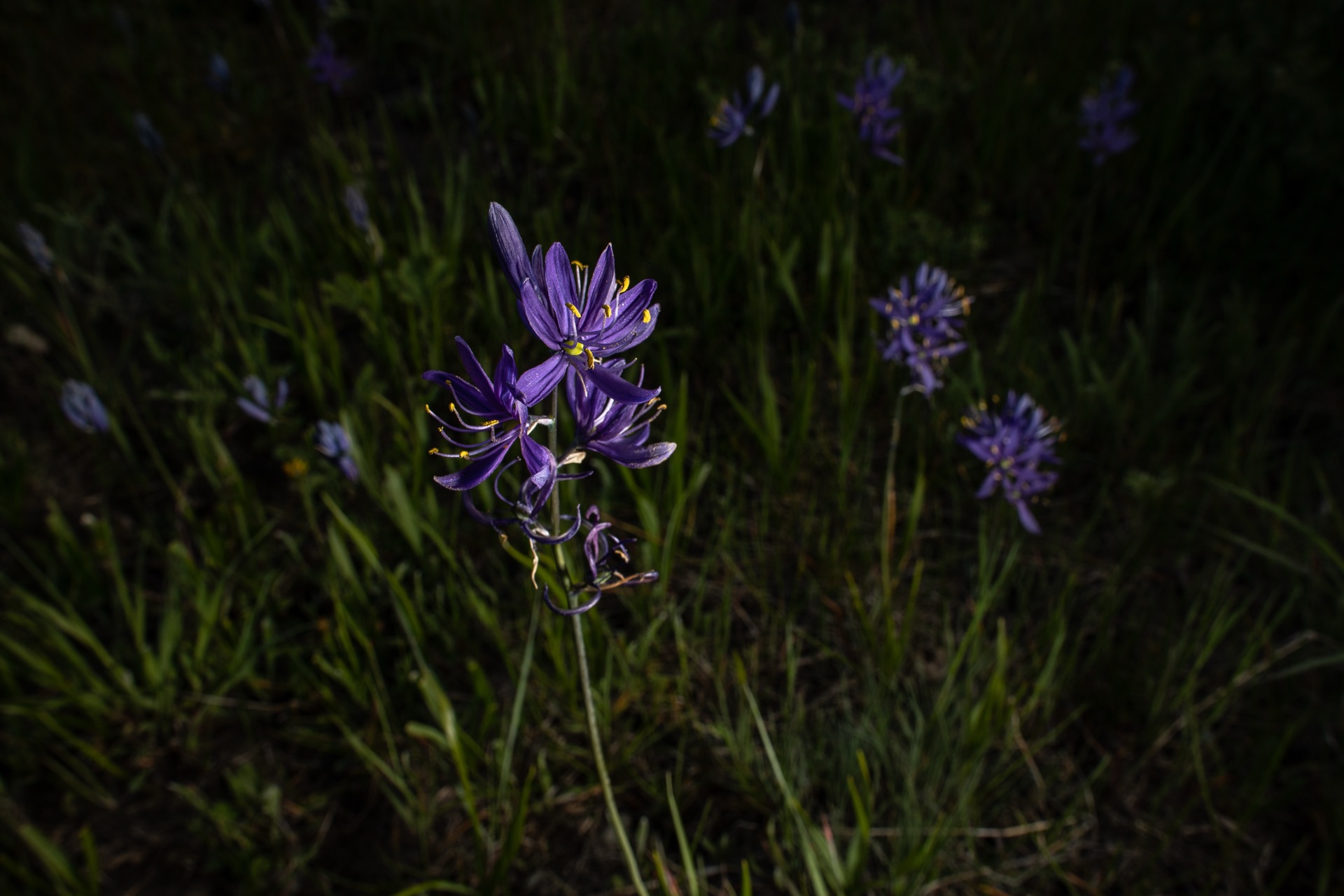
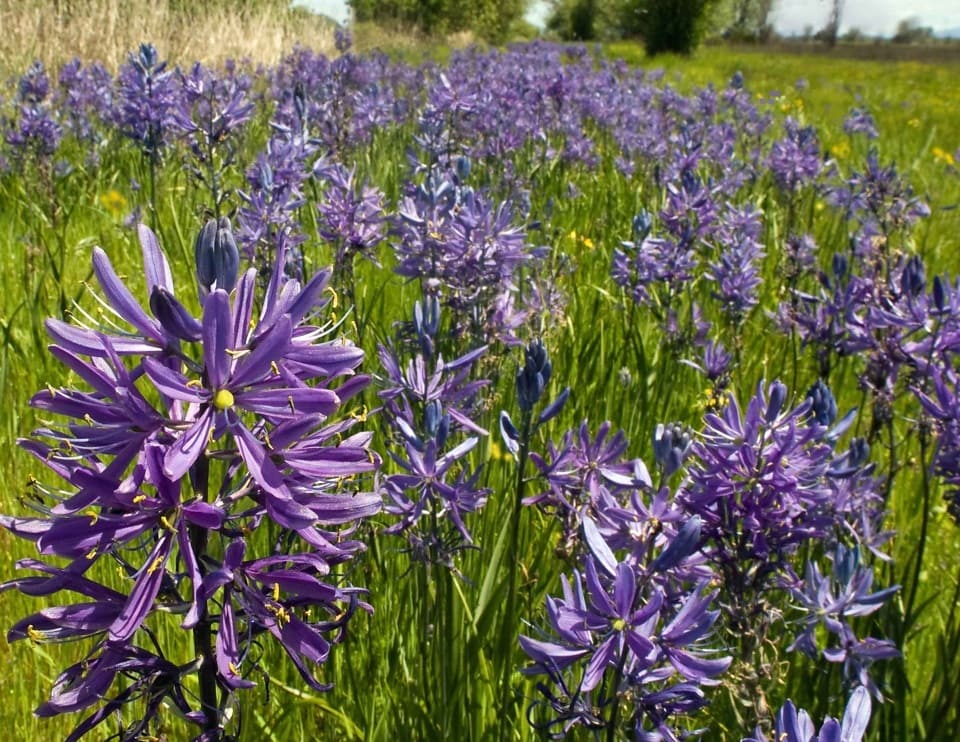
Camas in full bloom at Camassia Natural Area — a field of blue-violet so dense it looks like standing water, the meadow exactly as it appeared for thousands of years.
物の哀れ · Mono no Aware
Most of these meadows are gone — converted to farmland generations ago, the blue seas now only at the edges of memory and in scattered preserves. What remains is a fraction.
What the season brings?
Late April through early May transforms camas meadows into breathtaking seas of blue flowers across the Pacific Northwest, particularly in the Willamette Valley, Puget Sound prairies, and southern British Columbia. Common camas (Camassia quamash) produces tall spikes of star-shaped blue-purple flowers that once covered hundreds of thousands of acres before agricultural conversion. These bulb-forming plants were one of the most important food sources for indigenous peoples throughout the region, with tribes managing meadows through burning and selective harvesting for thousands of years. Camas bulbs were pit-roasted for days to convert inulin into digestible sugars, creating a sweet, nutritious food that could be dried and stored. Today, remaining camas meadows are conservation priorities, with places like Camassia Natural Area in West Linn, Oregon preserving these culturally and ecologically vital ecosystems.
Convergence chain
Triggered by
Camassia quamash blooms in the precise window when seasonally wet meadow soil has dried enough for access but before summer drought shuts down growth; indigenous burning historically maintained the open, wet-dry meadows camas requires — without fire, Douglas fir encroachment eliminates the habitat
Enables
Mass-blooming camas is the critical large-scale pollen resource for bumblebee colonies at peak queen and worker production; camas bulbs were a keystone food for Coast Salish, Nez Perce, and other indigenous peoples, driving the entire landscape management philosophy of the region; the meadow openings support savannah-nesting birds wherever they remain
The cascade
Late April sun dries meadow surface while soil still moist → camas erupts in dense blue-purple sheets → bumblebee colonies at peak worker production concentrate on camas pollen and nectar → colony growth accelerates → historically, Coast Salish people harvested bulbs after flowering → burning regimes that maintained camas meadows also maintained open habitat for western bluebirds and northern harriers → without fire, camas meadows close to forest within decades
Foods to Mark the Season
Salmonberries are ripening broadly across coastal rainforest zones of western Washington and Oregon, coinciding with spring Chinook in coastal streams—a traditional Indigenous pairing. Morel season continues in burn zones and higher riparian sites. Local lettuces, radishes, and spring greens are abundant at regional farmers markets, and Yakima Valley asparagus is at peak supply.
Events This Season
West Linn, OR, mid-April through early May. The Nature Conservancy's Camassia preserve — one of the last intact camas and Oregon white oak meadow ecosystems in the Willamette Valley — opens to the public during the bloom. A self-guided pilgrimage to see what the valley looked like before settlement.
events / oregon / camassia-natural-area →McMinnville, OR, early May. An Indigenous-centered celebration of the camas lily's cultural and ecological significance — featuring an Indigenous Creator's Market, traditional foods from the camas harvest, a food sovereignty panel, and a campus meadow walk.
events / oregon / camas-festival-linfield-university →Hoquiam, WA, last weekend of April. Up to a million Western sandpipers and dunlins stage at Grays Harbor National Wildlife Refuge each late April, fueling for their Arctic-breeding flights on the same week camas floods the inland meadows. Guided bus trips to the tidal flats, shorebird ID workshops, and kayak tours organized by the Grays Harbor Audubon Society.
events / washington / grays-harbor-shorebird-festival →
This Season’s Podcast
Camas Meadow Bloom
Camas once flooded the meadows of the Pacific Northwest in waves of blue-violet — a living sea that fed and shaped Indigenous civilizations for thousands of years. We explore what these meadows were, what remains, and what their return means.
Frequently Asked Questions
Visions of the Season
Read more
Each microseason is approximately 5 days, marking the subtle changes in nature throughout the year.