Black Trumpets Fruit
Black Trumpets Fruit
65/72: Nov 22 to 26
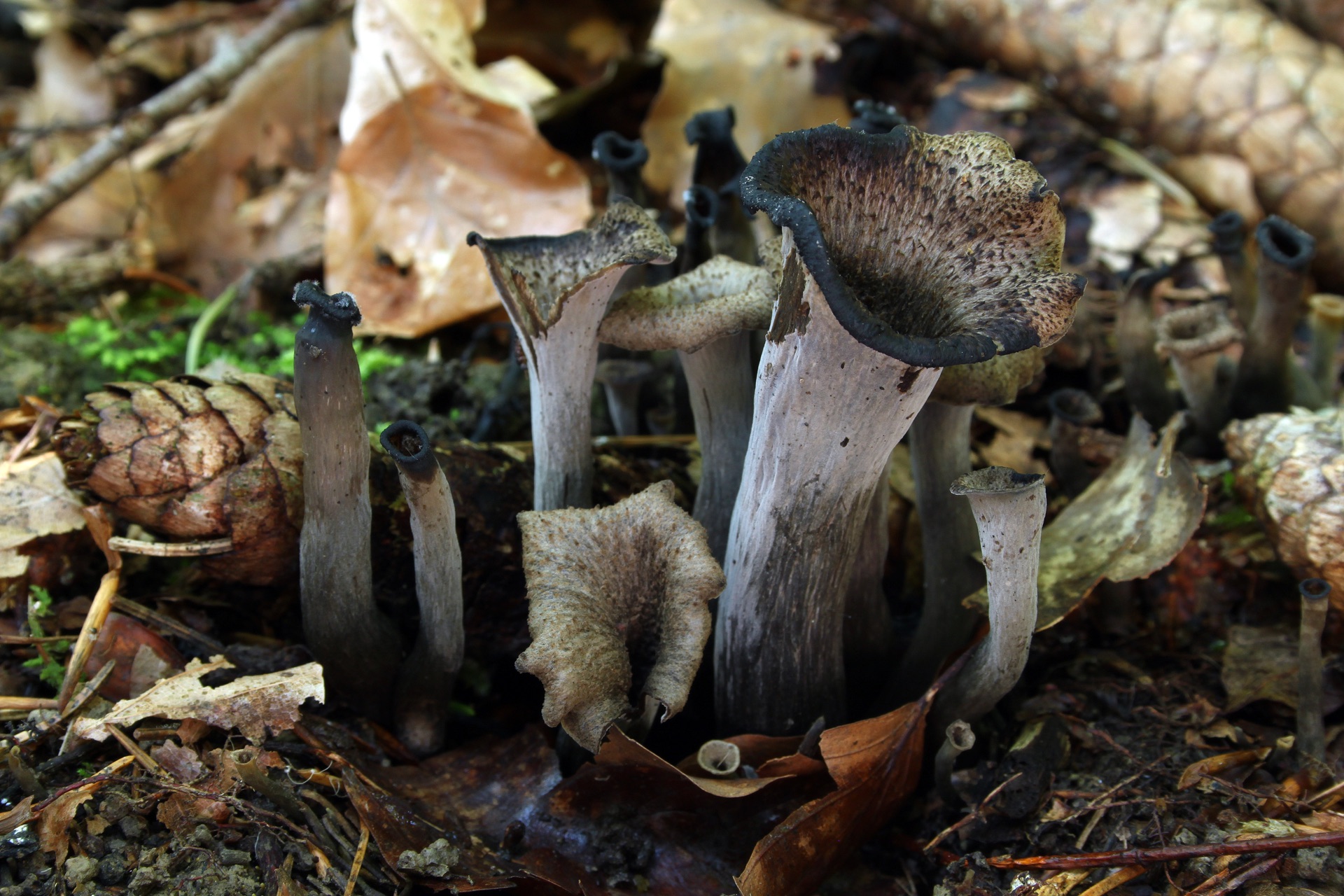
Black trumpets fruit in the leaf litter. Winter's delicacy, chanterelles of the dead.

風物詩 · Fūbutsushi
Black trumpet mushrooms rising from decomposed oak leaves in late November — jet black and nearly invisible against the wet duff, winter's hidden delicacy.
物の哀れ · Mono no Aware
By January, they will be gone. The forest floor returns to silence and bare soil. Winter gives this one small gift and then takes it back.
What the season brings?
Late November through December brings black trumpet mushrooms (Craterellus cornucopioides and C. foetidus) to Pacific Northwest forests, with these elusive fungi fruiting in the leaf litter beneath hardwoods and mixed forests. Black trumpets, also called "trumpets of death" or "horn of plenty," are among the most prized wild mushrooms despite their somber appearance—they're jet black, trumpet-shaped, and nearly invisible against dark forest duff. Their common names belie their excellent culinary qualities, with a rich, earthy flavor and firm texture that improves with cooking. Black trumpets fruit during the coldest, wettest months when most other mushrooms have finished their season, making them true winter delicacies. They often grow in large patches and return to the same locations year after year, though their camouflage makes them challenging even for experienced foragers. The mushrooms are hollow and easy to clean, freezing well for year-round use.
Convergence chain
Triggered by
Craterellus cornucopioides fruits in deepest fall, requiring consistently cool soil (below 10°C) and saturated conditions; they are among the last fungi to fruit each season, appearing after chanterelles and hedgehogs have peaked; their near-black color makes them nearly invisible in the leaf litter
Enables
Black trumpet fruiting indicates the forest floor has reached the deep moisture saturation that will sustain late fungi into winter; Season 72: Winter Mushrooms Appear will follow on the same moisture pulse; black trumpet patches are site-faithful for decades, returning to the same locations reliably
The cascade
Deep soil saturation and cool temperatures arrive in late November → black trumpets push through oak leaf litter and mossy forest floor → the patches are in old established locations unchanged for decades → foragers who know them arrive → the same soil conditions sustain the fungal network through winter → velvet foot and oyster mushrooms follow on dead hardwood within weeks → black trumpet season closes the year's wild mushroom calendar before winter fungi open it again
Foods to Mark the Season
Thanksgiving leftovers transform into creative new dishes—turkey soups, cranberry-topped morning toast, and stuffing-based casseroles. Black trumpet mushrooms themselves make luxurious additions to holiday leftover risottos and creamy pasta dishes, their rich earthy flavor complementing comfort food perfectly.
Things to Do
Head to the forests for winter mushroom foraging—black trumpets reward patient, careful searchers who walk slowly and scan the leaf litter. Their camouflaged appearance makes finding them challenging but discovering a patch is thrilling, as they grow in clusters and return to the same locations year after year.
Frequently Asked Questions
Visions of the Season
Read more
Each microseason is approximately 5 days, marking the subtle changes in nature throughout the year.