72 Microseasons of the Pacific Northwest
54/72: Sep 28 to Oct 2
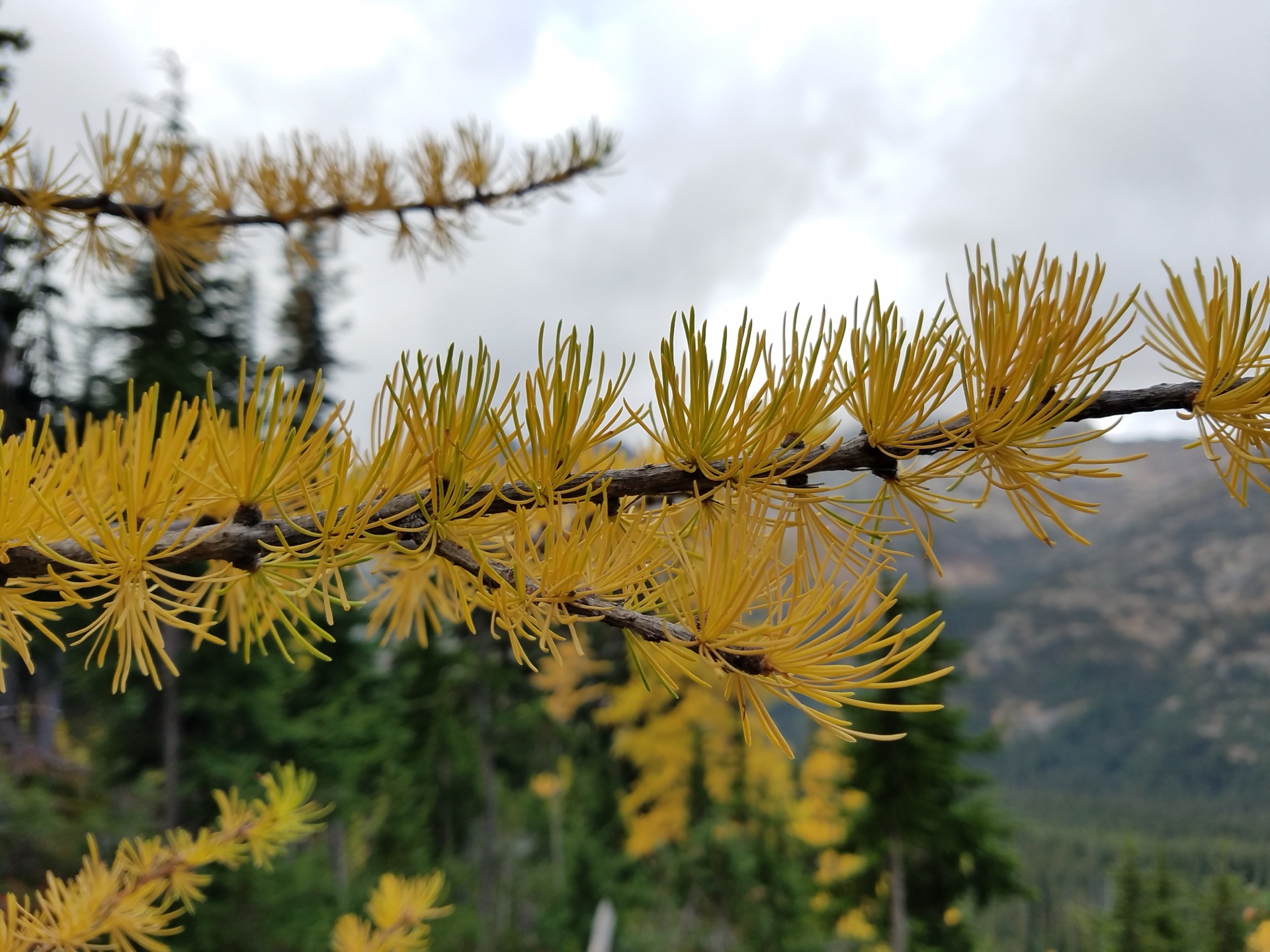
Larch forests turn to gold. Deciduous conifers blazing before the snow.

What the season brings?
Late September through early October brings spectacular golden displays as western larch (Larix occidentalis) and subalpine larch (Larix lyallii) transform high-elevation forests throughout the Cascades and northeastern Washington. These deciduous conifers—unusual trees that drop their needles each fall—turn brilliant golden-yellow before shedding, creating stunning displays visible for miles. Western larch grows at mid to high elevations (2,000-7,000 feet) in the eastern Cascades and northeastern Washington, while subalpine larch occupies the highest elevations (5,000-8,000 feet) near timberline. The trees often grow in pure stands or mixed with other conifers, and their golden needles contrast dramatically with surrounding evergreens. Peak larch color typically occurs in late September in the North Cascades and early October in more southern locations. Popular larch viewing destinations include the Enchantments, Maple Pass, and numerous other high-country trails.
Foods to Mark the Season
Chanterelles, king boletes, and matsutake are all simultaneously findable—the richest mushroom foraging window of the year in the Pacific Northwest. Chum salmon (*Oncorhynchus keta*) runs build in Hood Canal tributaries and coastal rivers, their roe a prized delicacy. Willamette Valley and Walla Walla grape harvests continue, and Hood River pears and apples are at peak.
Frequently Asked Questions
Visions of the Season
Read more
Each microseason is approximately 5 days, marking the subtle changes in nature throughout the year.